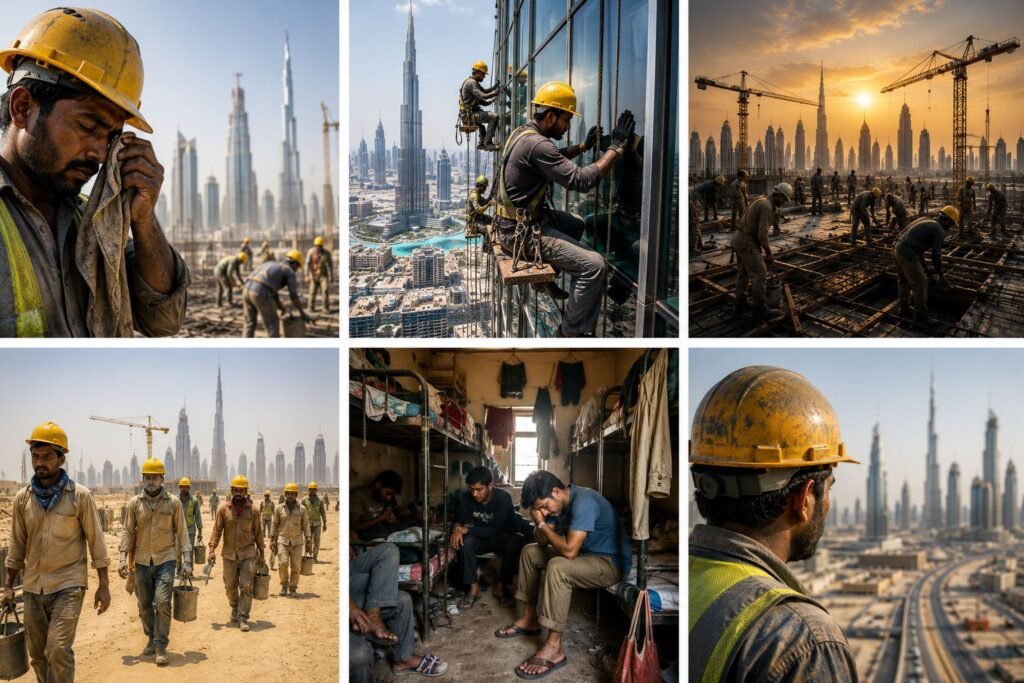
Sometimes the greatest tragedy of a nation is not poverty, war, or political instability. Sometimes it is a mistake repeated so quietly over decades that an entire generation pays the price without even realising it. Pakistan’s story is, in many ways, one such story. For years, we exported our youth to foreign markets, but we never truly invested in preparing them for the future. We trained hands but neglected minds. We focused on labour but ignored human capital. While the world was moving toward technology, innovation, and digital transformation, many of our young people were still being prepared for low-wage jobs that offered survival but not growth.
The consequences of that neglect are visible everywhere. Thousands of young Pakistanis still risk their lives every year in search of opportunity. Some hide inside containers hoping to reach Europe. Others trust human traffickers who sell dreams but deliver tragedy. Many disappear in deserts, drown in oceans, or become victims of criminal networks. Behind every such story is a mother waiting for a phone call, a father carrying the burden of debt, and a family hoping that one son working abroad will somehow change their destiny. These are not isolated incidents. They are symptoms of a deeper problem. The world changed, but we failed to prepare our youth for that change.
While Pakistan continued exporting low-skilled labor, other nations were preparing for the digital economy. Countries like India understood decades ago that the future would belong to those who mastered technology, communication, networking, software, data, and innovation. They invested heavily in education, certifications, and global skills. As Gulf countries transformed from construction-based economies into knowledge-based economies, new opportunities emerged in artificial intelligence, cloud computing, cybersecurity, healthcare technology, aviation, finance, and digital services. Millions of jobs were created, but many of those opportunities were captured by nations that had prepared their people for the future.
This reality forced a difficult question: how long can we continue watching our youth leave through dangerous routes when the real solution is education, skills, and preparation? That question eventually led to discussions with Cisco, one of the world’s most respected technology companies. The objective was not merely to introduce another training program. The objective was to create a pathway through which young people from Khyber Pakhtunkhwa and Balochistan could compete in the global economy with dignity, confidence, and internationally recognized skills.
The journey, however, was far from easy. The first challenge was rebuilding trust. Convincing a global organization to invest its attention and confidence in regions where previous experiences had not always been encouraging required patience, persistence, and vision. The second challenge was perhaps even greater: convincing our own educational institutions that the future had arrived and that traditional approaches were no longer enough. Educational leaders had to understand that this was not simply another project. It was a response to a generational crisis. It was an attempt to ensure that the next generation would not repeat the struggles of the previous one.
Today, Alhamdulillah, more than one hundred educational institutions have joined this journey. Their leadership teams are receiving training, international experts are sharing knowledge, and a foundation is being built for long-term change. Yet the most important phase still lies ahead. The institutions themselves must now carry this vision into classrooms, communities, and homes. They must equip students with the skills that modern economies demand and the confidence that global markets reward. The responsibility has now shifted from planning to implementation.
What gives hope is the realization that Pakistan’s greatest asset has never been its natural resources. Its greatest asset has always been its young people. The talent exists. The intelligence exists. The ambition exists. What has often been missing is direction, opportunity, and a system capable of converting potential into achievement. If that gap can be closed, there is no reason why young Pakistanis cannot become leaders in technology, innovation, entrepreneurship, and global business.
Perhaps that is the real dream behind this entire effort—not simply to create jobs, but to create futures; not simply to export workers, but to develop professionals; not simply to earn remittances, but to build human capital. If we succeed, future generations will no longer be known for risking their lives in containers, deserts, and oceans. They will be known for their skills, their ideas, and their contributions to the world. And that is a future worth working for.