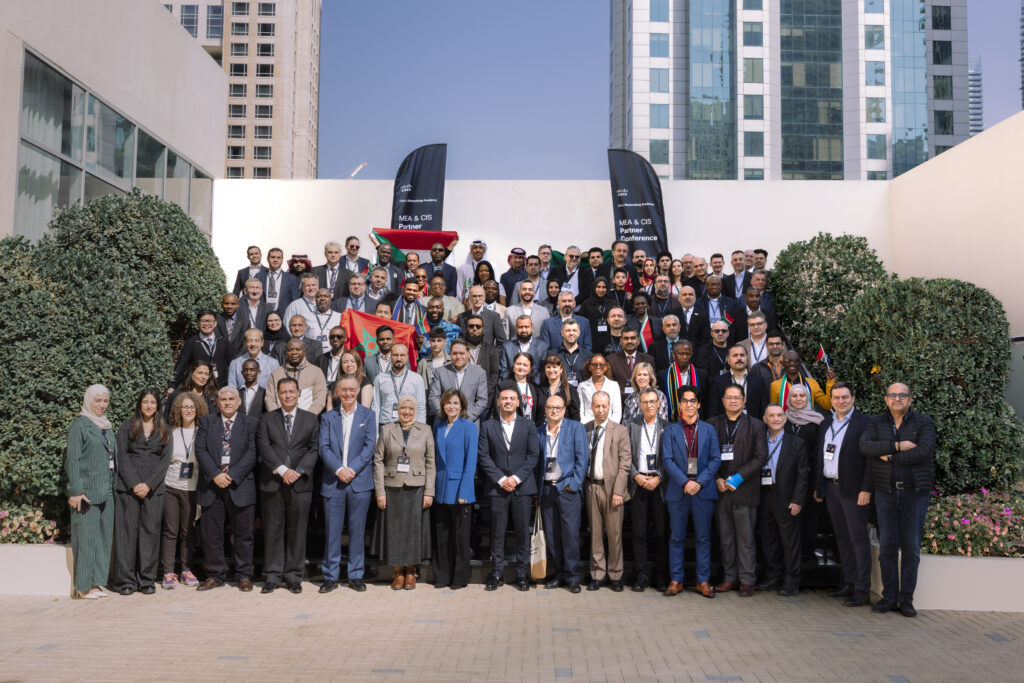
A Prestigious Invitation: Aleem Shah Khilji Chosen as One of Asia’s Best Educational Leaders.
The invitation to Aleem Shah Khilji to take part in the Dubai Summit was a significant event for both USECS and Pakistan as a whole. This invitation is really important because only five people from across Asia were chosen for this special level of involvement. This kind of acknowledgement shows that people trust the institutions deeply and shows that Pakistani educational leaders are becoming more credible around the world. Cisco’s choice to include Mr. Khilji in this elite group shows that international events are now recognising consistent excellence, strategic vision, and a commitment to empowering young people.
Mr Khilji’s presence represents Pakistan, especially Khyber Pakhtunkhwa and Balochistan
On the global stage, people are working together to define the future of AI, digital skills, and workforce development. This involvement puts Pakistani institutions in the middle of discussions about the future of employment at a time when the world’s economy is quickly moving toward automation, AI-driven systems, and digital infrastructure. It’s not just a visit; it’s a strategic representation.
USECS wants to provide organised training in Agentic AI and Generative AI that is in line with industry standards through this partnership. This will help young people in underprivileged areas get access to new technologies. These new technologies are changing businesses all over the world. USECS is continuing its aim to connect local talent with global opportunities by putting students from KPK and Balochistan at the centre of this technological wave.
People in Khyber Pakhtunkhwa and Balochistan are proud of this occasion because it shows that Pakistani institutions can be recognised by some of the best technology networks in the world. It sends a strong message: with hard work, consistency, and a clear goal, global innovation can be brought directly to areas that were once thought of as out of the way in the global technology scene.
Attending the 2026 Cisco Networking Academy Regional Partner Conference in Dubai
Alhamdulillah, Aleem Shah Khilji went to Dubai for the 2026 Cisco Networking Academy Regional Partner Conference for the Middle East, Africa, and CIS. This was a big step forward for Pakistan’s involvement in education on the world stage. This conference wasn’t just a regular meeting; it was a high-level strategic platform where educators, policymakers, and technology leaders from around the world came together to talk about the future of education and workforce development.
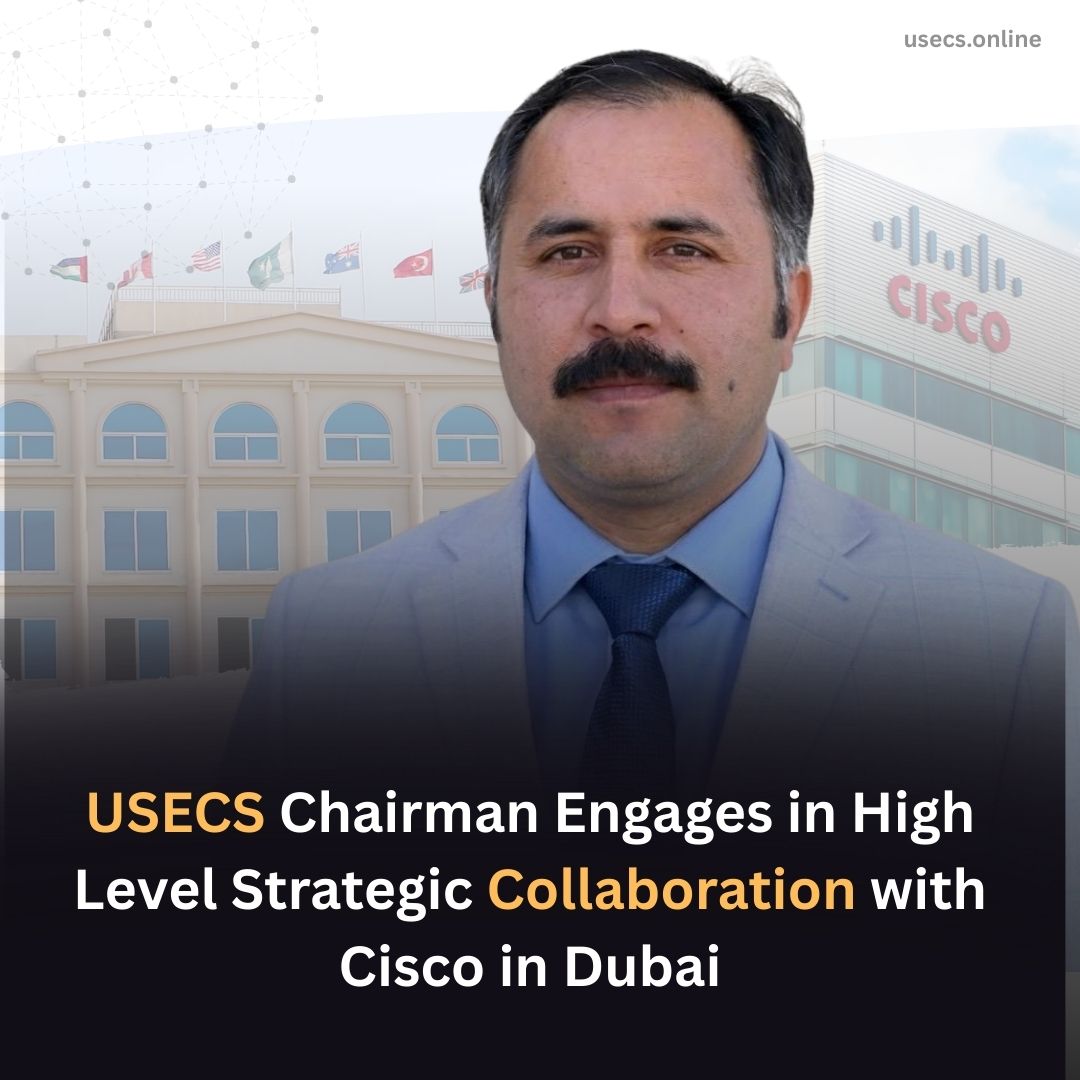
The 2026 conference was mostly about what experts called the “AI moment,” which was a time when AI was changing industries, changing the skills needed for jobs, and affecting global employment trends. The talks were mostly about how to use AI in structured academic programs, how to make digital training match the needs of businesses, and how to get young people ready for new global careers. Such a high level of participation showed trust in the institution and recognition around the world.
Mr. Khilji spoke for Pakistan, especially Khyber Pakhtunkhwa, at the conference, which was a very important international event. His participation made sure that Pakistan’s educational efforts were talked about in global talks that were influencing the future of digital learning. It showed how USECS is becoming more important in linking local students with the latest technology standards around the world.
This participation gave students and schools back home useful information, strategic exposure, and chances to work together that were supposed to help them immediately. The experience made them more determined to introduce organised AI education, digital skills training, and initiatives that help young people find jobs in Khyber Pakhtunkhwa and Balochistan.
Expanding Global-Standard Cisco Training for Youth in Khyber Pakhtunkhwa and Balochistan.
It was made clear during the conference’s talks and strategic meetings that the courses and training programs that Cisco Networking Academy is now offering around the world are not just transient skill-building projects, but rather the building blocks of the future global economy. Artificial intelligence, cybersecurity, enhanced networking, data management, and digital infrastructure were now necessary for every government, organisation, and sector. These were no longer optional areas; they were shaping the way that current workforce development works.
In this environment, the objective was very clear: the youngsters of Khyber Pakhtunkhwa and Balochistan should learn the same curriculum that is taught in industrialised countries and is known around the world. The goal was not to set up training at the regional level, but to make it possible for people to take international-standard courses and get certifications that are useful in other countries. It was stressed that students from these areas should have the same academic opportunities and professional legitimacy as those in Europe, North America, and other developed economies.
The program was set up in a systematic and stepwise way to reach this goal. First, the focus was on making institutions stronger, training qualified teachers, and setting up a strong academic foundation. Students would only be sent to specialised technical instruction after they had built this foundation. This step-by-step method made sure that the project would last, that the quality would be high, and that it would have a long-term effect instead of just making short-term announcements.
It was also said that Cisco’s courses were meant to be useful, up-to-date, and in line with what is happening in the industry. A determined and conscientious student might learn abilities that would make them competitive on an international level in one to one and a half years. It wasn’t necessary to be very talented to do well in these programs; all you needed was the right supervision, consistency, and hard work. Students may look for jobs not only in Pakistan but also in Europe, the United States, the Gulf area, and other foreign markets if they have these talents that are in high demand throughout the world.
The message was obvious at these meetings: in today’s interconnected world, success depends on having international skills, structured training, and credentials that are recognised around the world. This project could have changed Khyber Pakhtunkhwa and Balochistan into areas known for skilled workers, economic independence, dignity, and long-term growth by making smart and timely choices in education.
A Historic Milestone: MoU Signed Between USECS and Cisco Networking Academy in the UAE
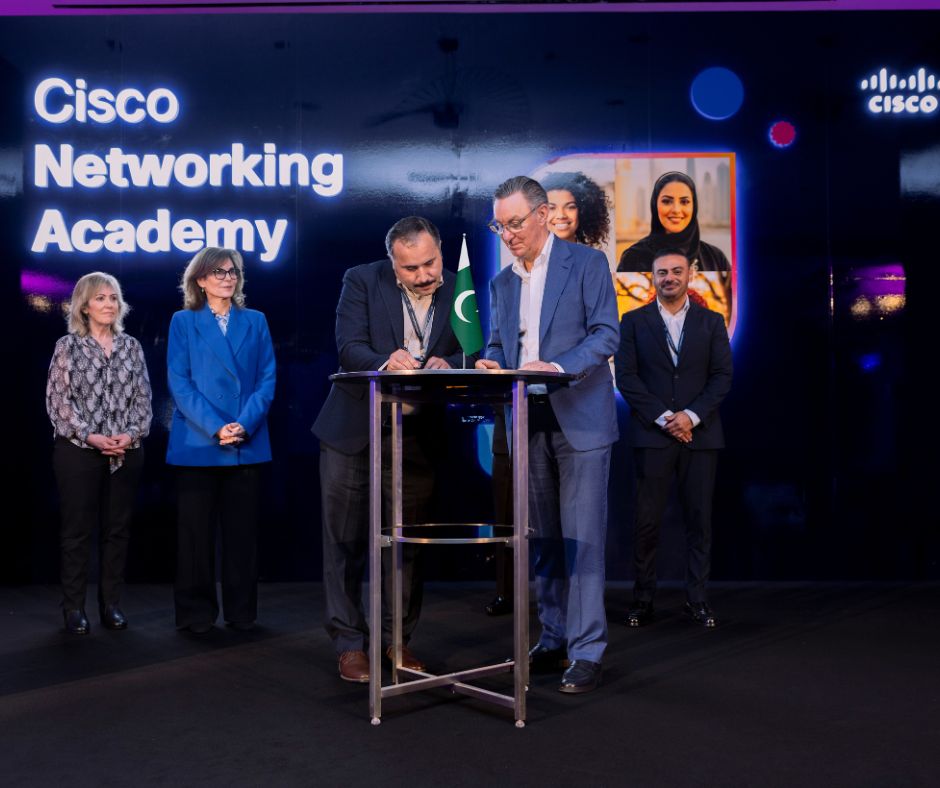
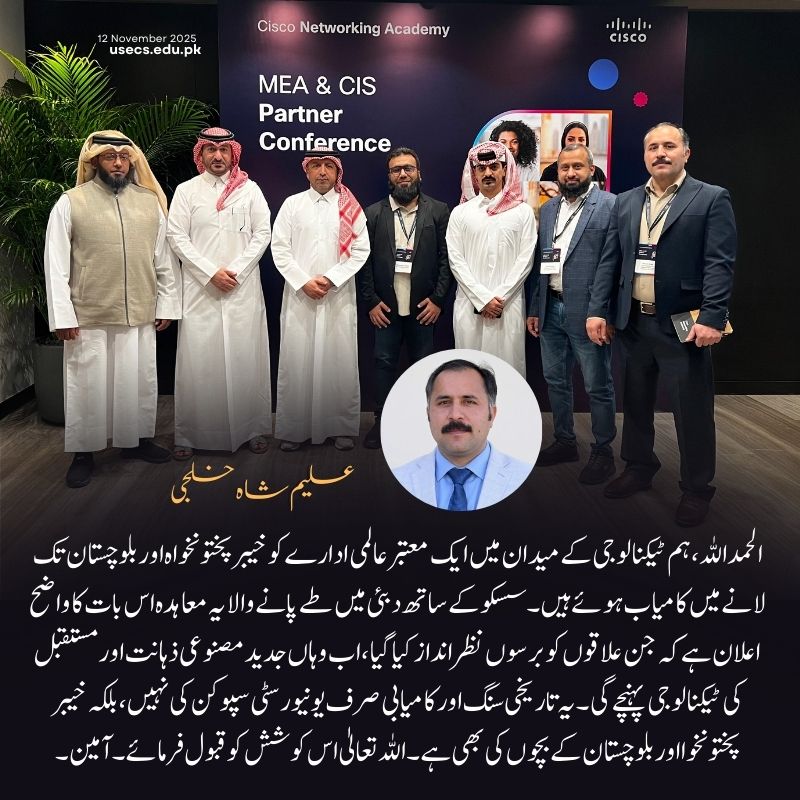
A defining moment of pride unfolded in the United Arab Emirates when the University of Spoken English & Computer Sciences (USECS) officially signed a Memorandum of Understanding (MoU) with Cisco Networking Academy (Cisco NetAcad). This was not merely a formal agreement; it marked a historic milestone for Pakistan’s educational and technological landscape. The signing symbolised institutional trust, international collaboration, and a shared commitment to empowering youth through globally recognised digital education.
This partnership was particularly significant for the young generation of Khyber Pakhtunkhwa and Balochistan, as it laid the foundation for structured access to international-level technical training and certification pathways. The MoU strengthened USECS’s position as a strategic partner within the Cisco NetAcad ecosystem and reinforced its mission of bridging underserved regions with world-class opportunities.
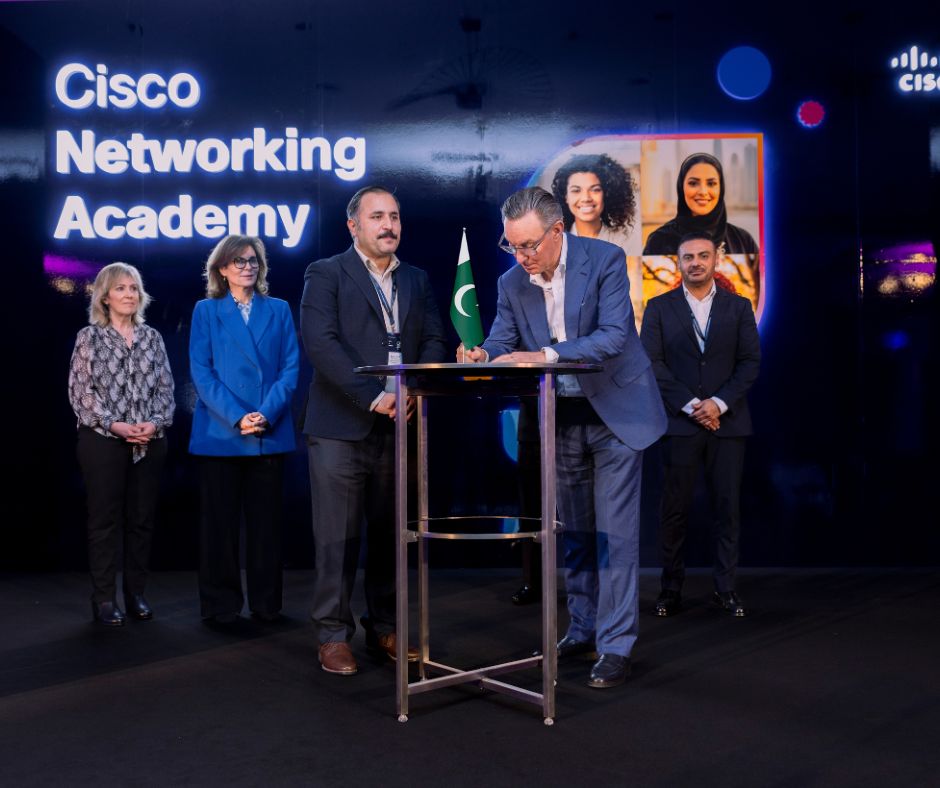
On behalf of the institution and the youth of Pakistan, sincere appreciation was extended to Cisco’s distinguished leadership, whose support made this achievement possible. Special gratitude was conveyed to:
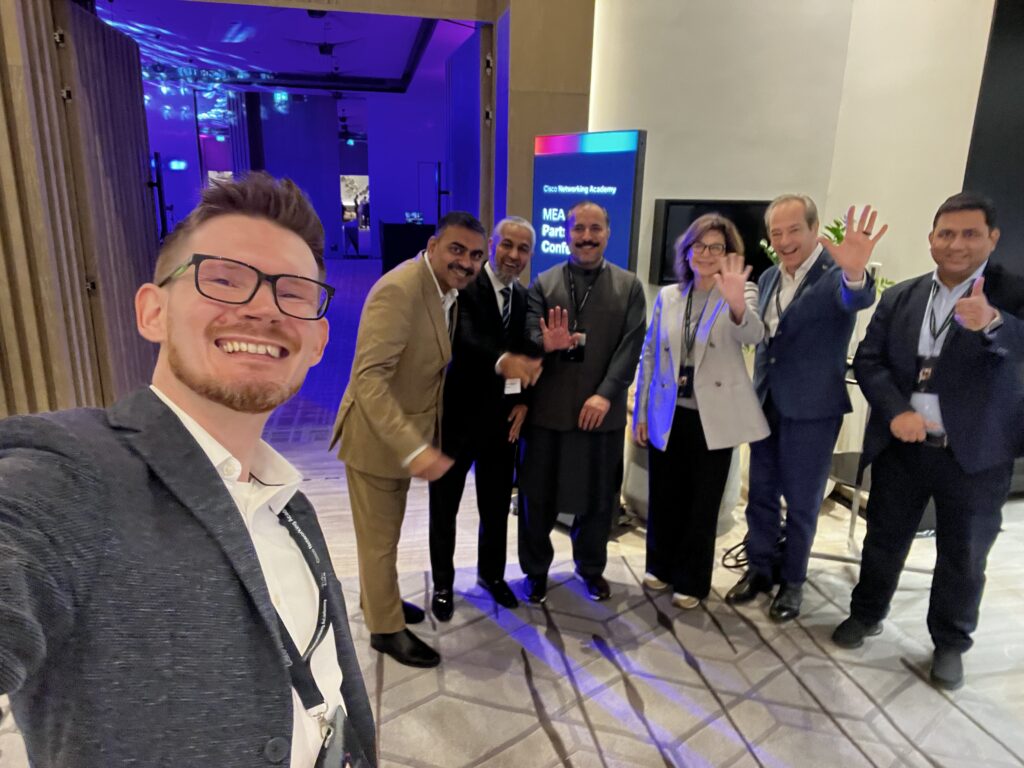
- Faheem Anwar– BDM Cisco NetAcad, Pakistan
- Ahmed Elkabbany– MEA & CIS Digital Impact Office Leader, Cisco
- Par Merat– Vice President, Learn with Cisco
- Chris Reeves– Vice President, Digital Impact Office, Cisco EMEA
- Pastora Valero– SVP, International Government Affairs, Cisco
Their confidence in the region and belief in the potential of youth from Khyber Pakhtunkhwa and Balochistan reflected a broader vision of inclusion and digital transformation. By integrating these regions into the Cisco NetAcad mission, this collaboration positioned Pakistani students within a global learning network that prioritises skills, innovation, and competitiveness.
Beyond education, this agreement was expected to influence Pakistan’s future economy, workforce readiness, and global connectivity. It signalled a transition from aspiration to structured execution– from local ambition to international alignment. The partnership reinforced a powerful message: when institutions collaborate with sincerity, strategy, and shared purpose, they create opportunities that extend far beyond classrooms.
The moment concluded with optimism and conviction– the belief that the future ahead was bright. Through collaboration, structured training, and global engagement, the foundation had been laid for a generation prepared not only to participate in the digital economy but to lead within it.
USECS Achieved International Recognition as Cisco NetAcad Support Center
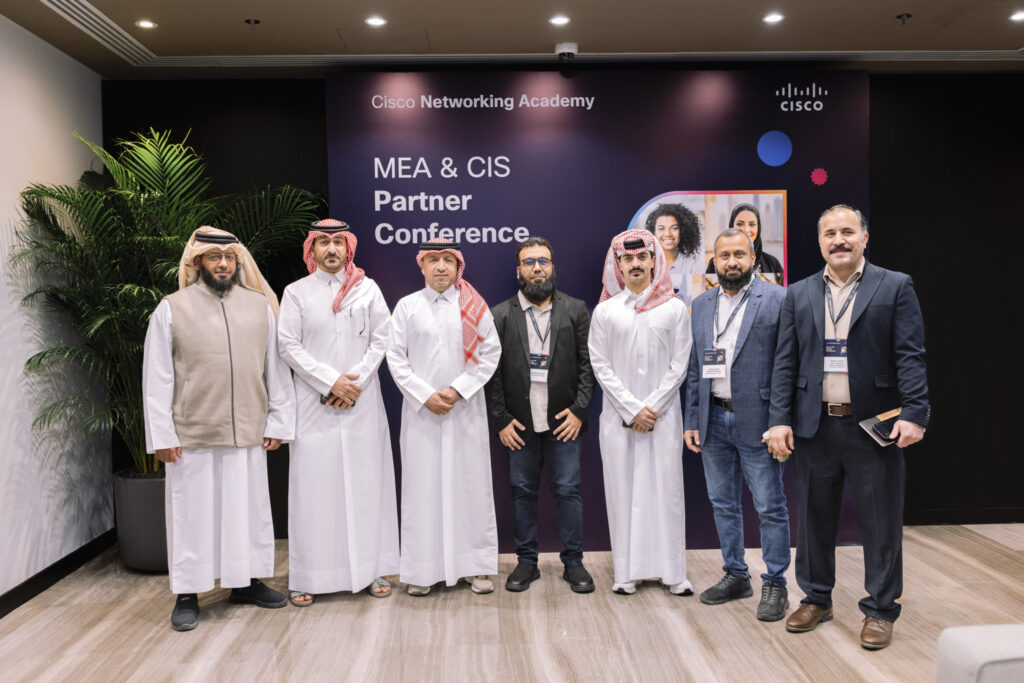
Alhamdulillah, a proud and historic milestone was achieved when USECS officially attained international recognition through the signing of the Memorandum of Understanding (MoU) with Cisco Networking Academy in the UAE. With this agreement, USECS formally secured the position of Cisco NetAcad support center for Khyber Pakhtunkhwa and Balochistan, marking a transformative moment not only for the institution but for the entire region.
This recognition elevated USECS from being a training provider to becoming a strategic regional support authority within the global Cisco Networking Academy ecosystem. As a designated Cisco NetAcad support center, USECS was entrusted with guiding, registering, and strengthening affiliated institutions across Khyber Pakhtunkhwa and Balochistan. The responsibility included facilitating instructor development, ensuring quality standards, providing structured academic content, and supporting the implementation of globally aligned digital training programs.
Such an achievement reflected years of dedication, consistency, and visionary leadership. It demonstrated that institutions from Pakistan– particularly from regions often considered underserved– could earn credibility and trust at the highest international platforms. The elevation to Cisco NetAcad support center status symbolised not just growth, but global integration.
USECS reaffirmed its commitment to empowering youth through modern skills, professional development, and regional connectivity. The mission remained clear: to create pathways where students could access world-class certifications, gain competitive expertise, and position themselves confidently within the international job market.
This milestone was also a moment of celebration for the entire USECS family. Faculty members, management teams, trainers, and administrative staff who had worked tirelessly behind the scenes were acknowledged for turning a long-held vision into reality. Their collective effort transformed ambition into institutional achievement.
The occasion stood as evidence that with structured planning, international collaboration, and unwavering dedication, regional institutions could rise to global standards– and in doing so, uplift entire communities toward a brighter and more competitive future.
Strategic Engagements with Global Technology Leaders at the Dubai Summit
During the Dubai Summit and the Cisco Networking Academy Regional Partner Conference, Aleem Shah Khilji engaged in a series of high-level interactions with global technology leaders, each discussion contributing to a broader vision of digital transformation for Pakistan, particularly for Khyber Pakhtunkhwa and Balochistan.
Interaction with Par Merat– Vice President, Learn with Cisco
A valuable and forward-looking interaction took place with Par Merat, Vice President– Learn with Cisco. Her leadership in integrating Cisco Networking Academy, Cisco U, and global certification pathways demonstrated how structured digital ecosystems are shaping the future of education worldwide.
The discussion highlighted how unified learning platforms enable students and professionals to build continuous, industry-aligned digital skills. Such a model holds immense relevance for regions like Khyber Pakhtunkhwa, where access to internationally structured training can drive meaningful economic and social progress. The exchange reinforced the idea that with the right platforms and guidance, local talent can be transformed into globally competitive professionals.

Engagement with Chris Reeves– Vice President, Digital Impact Office (EMEA), Cisco

At the MEA & CIS Partner Conference, Mr. Khilji held a significant interaction with Chris Reeves, Vice President– Digital Impact Office, Cisco (EMEA). His work focuses on leveraging technology as a catalyst for digital inclusion, economic empowerment, and sustainable development.
The discussion emphasised how structured digital transformation initiatives can strengthen institutions and prepare youth for the evolving demands of the global workforce. For countries like Pakistan, aligning regional institutions with such global digital impact frameworks is essential to unlocking long-term growth opportunities and building resilient digital ecosystems.
Meeting with Jozef Janitor– Product Manager, Cisco Networking Academy
Another productive discussion was held with Jozef Janitor, Product Manager at Cisco Networking Academy. His contributions to networking, cybersecurity, and DevNet education reflect the practical direction of global IT skills development.
The conversation centred on how structured technical education programs can prepare the next generation of IT professionals. Engagements like these are instrumental in ensuring that youth from emerging regions receive exposure to modern curricula that match international standards and evolving industry requirements.
Insightful Dialogue with Giuseppe Cinque– Principal Architect, Cisco
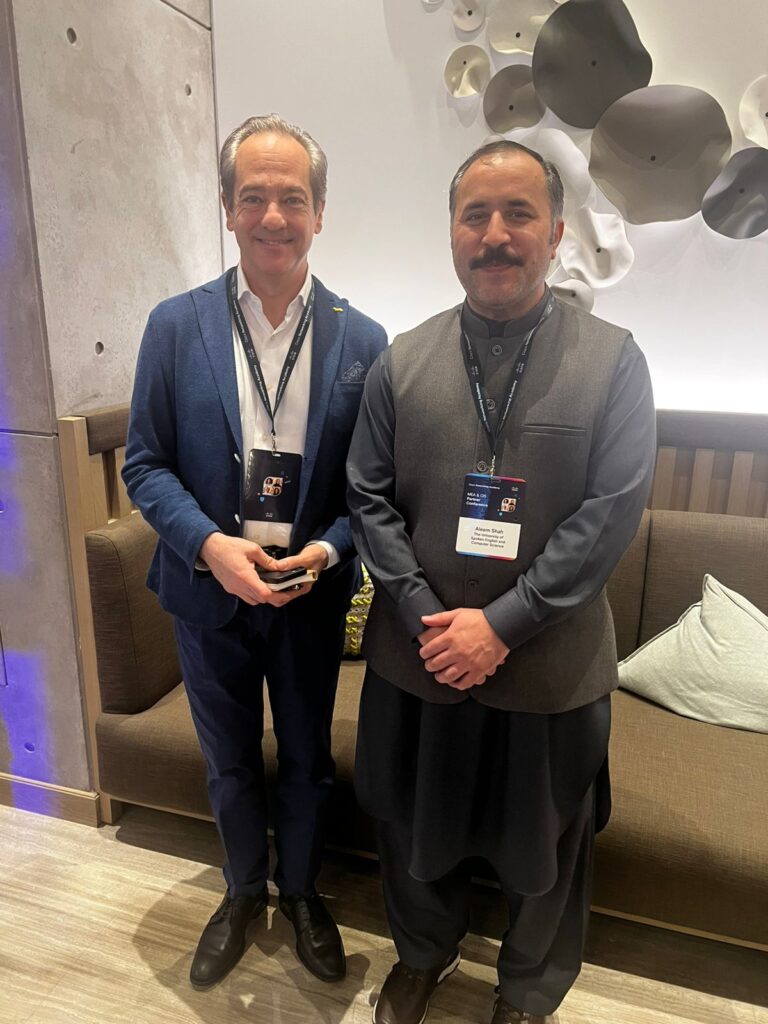
An interactive and insightful meeting also took place with Giuseppe Cinque, Principal Architect at Cisco. His experience in emerging technologies and advanced digital systems provided valuable strategic perspectives.
Such conversations strengthened the collaborative vision of bringing innovation-driven learning frameworks to Pakistan. Exposure to architectural and enterprise-level thinking in technology opened pathways for long-term academic alignment with future-focused digital transformation strategies.
Strategic Discussion with Dave Free– Product Strategy Manager, Cisco.
During the summit, Mr. Khilji also engaged with Dave Free, Product Strategy Manager at Cisco. His expertise in product strategy, platform management, and global partnerships provided meaningful insights into how international learning ecosystems can be localised effectively.
The discussion focused on adapting global platforms to regional realities, particularly for Khyber Pakhtunkhwa and Balochistan, ensuring that youth and institutions could align with future-ready technologies while maintaining contextual relevance.
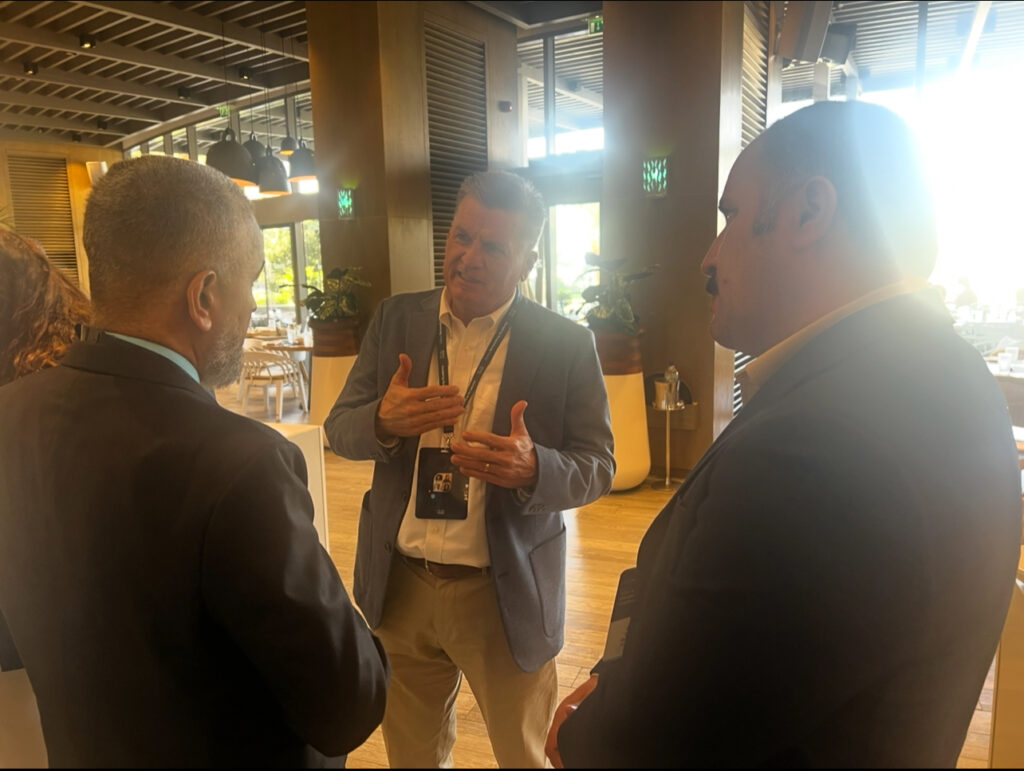
Meeting with Maciek Wichary– CEO, OpenEDG & Co-founder, Python Institute
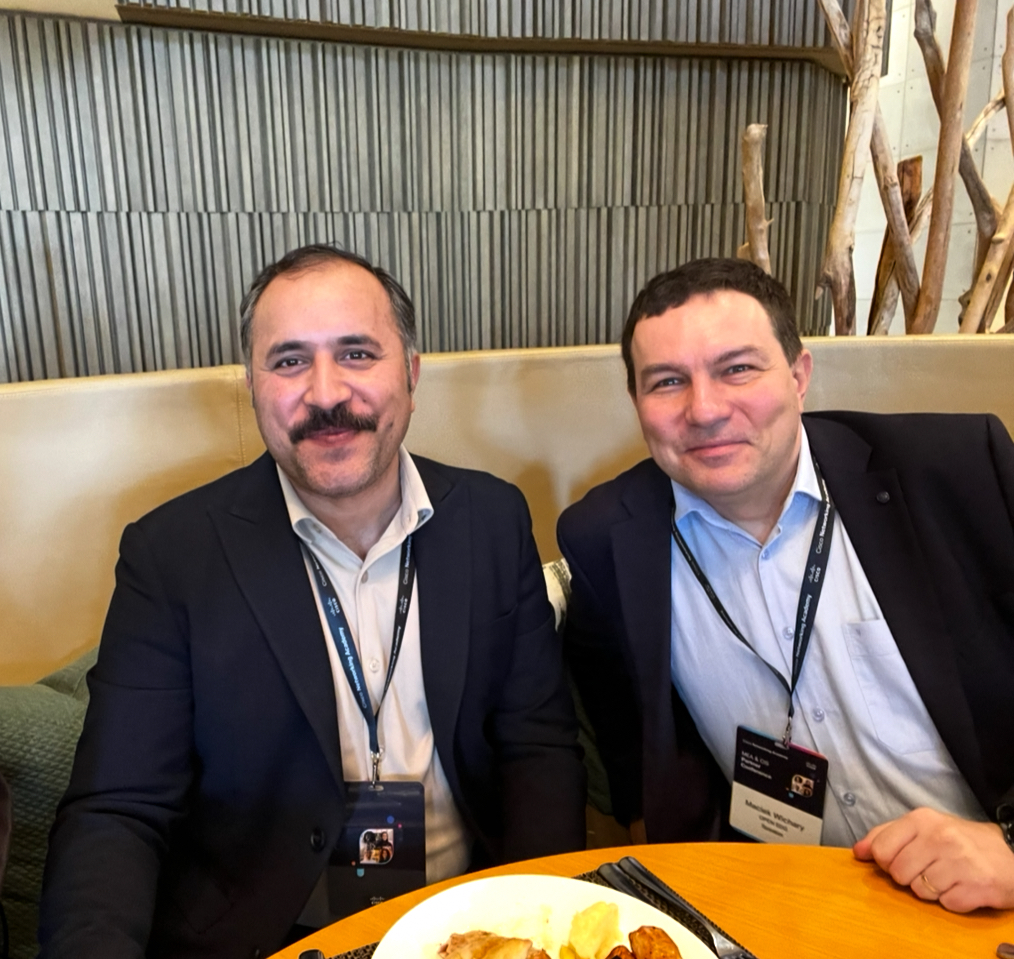
An engaging interaction took place with Maciek Wichary, CEO of OpenEDG and Co-founder of the Python Institute. His vision for scalable and globally recognised learning models in Python programming and digital skills demonstrated how structured certification frameworks can empower emerging regions.
The conversation highlighted how equipping students with programming expertise aligned to international standards can position them competitively in global markets. For regions striving for digital inclusion, such models offer both accessibility and scalability.
Meeting with Yasmine Hamdar– AI Policy Specialist, UNDP
A particularly forward-looking discussion occurred with Yasmine Hamdar, AI Policy Specialist at the United Nations Development Programme (UNDP). Her work in AI governance, ethics, and strategic policy frameworks underscored the importance of responsible and inclusive adoption of Artificial Intelligence.

The engagement emphasised how aligning youth training, institutional development, and policy awareness with global AI frameworks is essential for sustainable digital growth. For Khyber Pakhtunkhwa and Balochistan, such alignment ensures that technological progress remains ethical, structured, and globally connected.
Registration Open for Khyber Pakhtunkhwa and Balochistan Institutions
USECS is currently inviting educational institutions across Khyber Pakhtunkhwa and Balochistan to register and benefit from globally recognised training programs in Artificial Intelligence (AI), Cybersecurity, and advanced networking, offered in collaboration with Cisco Networking Academy. This initiative helps school owners, principals, and institutional leaders provide students with high-quality, industry-aligned education and access to internationally recognised certifications.
Upon registration, the USECS team carefully reviews and evaluates applications and prioritises institutions that are serious, organised, and committed to modern education. Approved institutions gain access not only to structured training content but also to practical facilities, including computer labs, hardware support, and cutting-edge technology required for hands-on learning.
This program supports institutions that view education not merely as curriculum delivery but as a foundation for nation-building and shaping the future. By participating, these institutions can ensure that their students receive world-class training, develop professional skills, and gain competitive opportunities both nationally and internationally.
Through this ongoing initiative, USECS continues to strengthen its role as the regional Cisco NetAcad Support Centre, bridging global digital education with local talent and empowering youth across Khyber Pakhtunkhwa and Balochistan.